
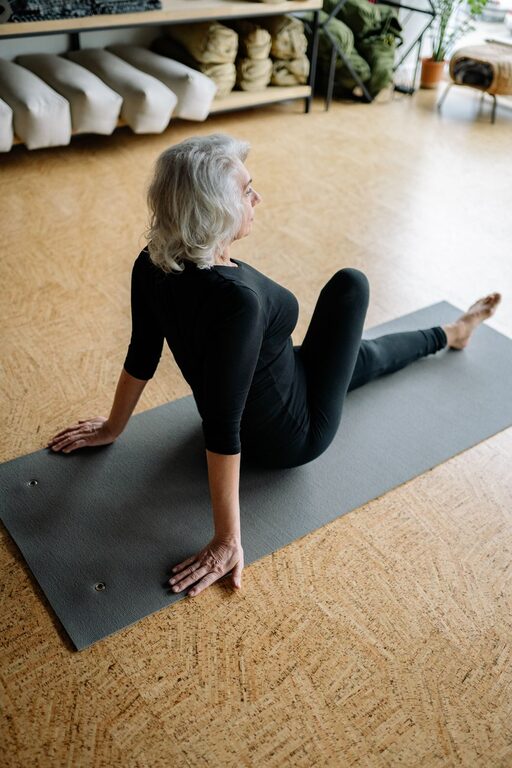
Why Flexibility Matters After 50
Flexibility can make everyday movements feel easier. Reaching for a shelf, getting dressed, walking comfortably, and bending to pick something up all depend on a useful range of motion.
As we age, muscles and joints may feel tighter, especially after long periods of sitting or limited activity. A regular stretching routine can help you maintain comfortable movement and improve body awareness. The goal is not to force your body into advanced poses. Instead, focus on slow, steady progress and movements that feel natural.
Stretching works best when it becomes part of your regular routine. A few minutes each day may be more helpful than one long session once a week.
Stretching Safely
Before beginning, keep these simple guidelines in mind:
– Move slowly and avoid bouncing.
– Stretch until you feel gentle tension, not pain.
– Breathe normally throughout each movement.
– Keep your movements controlled.
– Use a chair, wall, or countertop for balance when needed.
– Stop if you feel sharp pain, dizziness, numbness, or unusual discomfort.
– Avoid stretching cold muscles with force.
A short warm-up can prepare your body. Try walking around your home, marching gently in place, or moving your arms for five to 10 minutes before stretching.
If you have an injury, a long-term health concern, or questions about which movements are suitable for you, speak with a qualified health professional before starting a new exercise routine.
A Simple Daily Routine
This routine takes about 10 to 15 minutes. Complete each stretch gently, holding the position for 15 to 30 seconds. Repeat each side when appropriate.
1. Neck and Shoulder Release
Sit or stand tall with your shoulders relaxed.
Slowly lower your right ear toward your right shoulder. Keep your face pointing forward, and avoid lifting your shoulder to meet your ear. Hold gently, then return to the center and repeat on the left side.
Next, turn your head slowly to the right as if looking over your shoulder. Return to the center, then turn to the left.
Finish with shoulder rolls. Lift your shoulders slightly, move them back and down, and then forward in a smooth circle. Complete five rolls in each direction.
These movements can be useful after reading, working at a desk, or spending time on a phone.
2. Chest and Upper Back Stretch
Stand near a wall or sit toward the front of a chair.
Clasp your hands behind your back if that feels comfortable. Gently draw your shoulders back and lift your chest slightly. Keep your ribs relaxed and avoid arching your lower back. Hold for 15 to 20 seconds.
For an upper-back stretch, reach both arms forward at shoulder height and clasp your hands. Gently round your upper back while lowering your chin a little. Imagine widening the space between your shoulder blades.
Alternate between these two stretches to encourage comfortable movement through your upper body.
3. Seated Side Stretch
Sit in a sturdy chair with both feet flat on the floor. Place your left hand beside you or hold the side of the chair.
Raise your right arm overhead and lean gently to the left. Keep both sitting bones on the chair and avoid twisting your body. You should feel a stretch along the right side of your torso.
Return to the center and repeat on the other side. This stretch can help you maintain comfortable side-to-side movement.
4. Seated Spinal Turn
Sit tall with your feet flat and your hands resting on your thighs.
Place your right hand on the outside of your left thigh. Turn your upper body gently toward the left while keeping your hips facing forward. Do not pull or force the turn. Hold briefly, return to the center, and repeat on the other side.
Keep the movement easy and let your breathing remain steady. The purpose is to encourage gentle rotation, not to twist as far as possible.
5. Hip Flexor Stretch
Stand behind a sturdy chair and hold the back for balance. Step your right foot back a comfortable distance, keeping both feet pointing forward.
Bend your front knee slightly and keep your back heel lifted or lowered, depending on what feels comfortable. Gently shift your weight forward without arching your lower back. You may feel the stretch at the front of your right hip.
Hold, return to the starting position, and switch sides. Use a shorter step if you feel unsteady.
6. Seated Hamstring Stretch
Sit near the front of a chair. Extend your right leg forward with your heel on the floor and your toes pointing upward.
Keeping your back fairly straight, lean forward slightly from your hips. Do not round your back or reach forcefully toward your toes. Hold the gentle stretch behind your thigh, then return upright and switch sides.
If extending the leg feels uncomfortable, move your foot closer to the chair.
7. Calf Stretch
Face a wall and place both hands against it. Step your right foot back, keeping the toes pointed forward. Press the back heel gently toward the floor while bending the front knee.
Keep your back leg straight for one version of the stretch. To reach a slightly different area, bend the back knee gently while keeping your heel down, if comfortable.
Hold for 15 to 30 seconds, then change sides. Take small steps rather than forcing the heel down.
A Gentle Weekly Plan
You do not need to complete every stretch every day. Try this simple schedule:
– Daily: Neck, shoulder, chest, and easy leg stretches for five to 10 minutes.
– Three to five days a week: Complete the full 10- to 15-minute routine.
– Before a walk: Warm up with gentle marching and several shoulder rolls.
– After a walk: Use the calf, hamstring, and hip stretches while your muscles are warm.
Consistency matters more than intensity. Marking your routine on a calendar or pairing it with an existing habit, such as morning coffee or an evening television program, can make it easier to remember.
Common Stretching Mistakes
Avoid trying to make fast progress by pushing harder. Stretching should not involve sharp pain, holding your breath, or bouncing. It is also easy to focus on one area while forgetting the rest of the body. Include your neck, shoulders, back, hips, and legs for a balanced routine.
Another common mistake is skipping balance support. A chair or wall can help you stay steady and concentrate on the stretch. Using support is a practical choice, not a sign that you are doing something incorrectly.
Make Flexibility Part of Everyday Life
Stretching is only one part of maintaining comfortable movement. Regular walking, light strength exercises, and frequent breaks from sitting can also support an active lifestyle.
Start with movements that feel manageable, and increase the time gradually. With patience and regular practice, simple stretching can become an enjoyable way to move more freely and stay connected to your body after 50.